If you are interested in watching Italian news TV or Italian sport TV you can now watch RAI NEWS 24, a 24/7 news channel in Italian, and RAI SPORT, a 24/7 sport channel in Italian, on my site "HOW TO LEARN ITALIAN"
Saturday, June 10, 2006


Friday, June 09, 2006
Royal Palace of Caserta
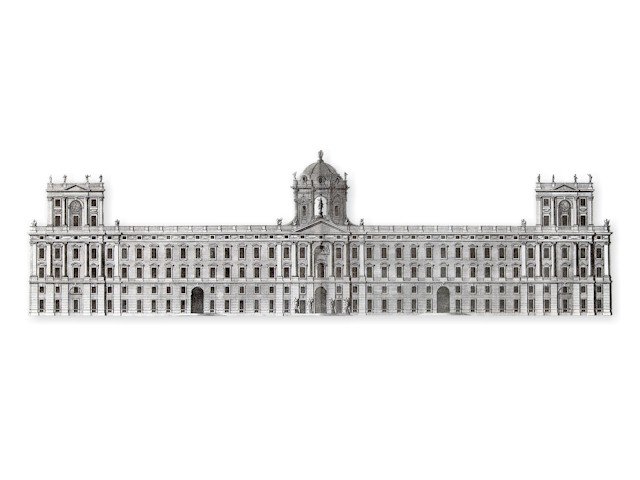 The ruling classes of eighteenth century Europe constituted a single nation whose homogeneity had not been equalled in preceding centuries. From Paris to Saint Petersburg, from Berlin to Naples, clear signs of this are found in customs such as the universal diffusion of the French language, in the sophistication of the aristocracy and the intellectual classes, as well as the philosophy of the Enlightenment or in the Masonic orders. Symbols of regal patronage and splendour, the palaces survived revolutions, bombardment and neglect, and thus represent the most tangible element of the grandness which lived in them.
Sunday, June 04, 2006
She wolf of Rome

LIVIUS I-4
But the Fates had, I believe, already decreed the origin of this great city and the foundation of the mightiest empire under heaven. The Vestal was forcibly violated and gave birth to twins. She named Mars as their father, either because she really believed it, or because the fault might appear less heinous if a deity were the cause of it. But neither gods nor men sheltered her or her babes from the king's cruelty; the priestess was thrown into prison, the boys were ordered to be thrown into the river. By a heaven-sent chance it happened that the Tiber was then overflowing its banks, and stretches of standing water prevented any approach to the main channel. Those who were carrying the children expected that this stagnant water would be sufficient to drown them, so under the impression that they were carrying out the king's orders they exposed the boys at the nearest point of the overflow, where the Ficus Ruminalis (said to have been formerly called Romularis) now stands. The locality was then a wild solitude. The tradition goes on to say that after the floating cradle in which the boys had been exposed had been left by the retreating water on dry land, a thirsty she-wolf from the surrounding hills, attracted by the crying of the children, came to them, gave them her teats to suck and was so gentle towards them that the king's flock-master found her licking the boys with her tongue. According to the story, his name was Faustulus. He took the children to his hut and gave them to his wife Larentia to bring up. Some writers think that Larentia, from her unchaste life, had got the nickname of "She-wolf" amongst the shepherds, and that this was the origin of the marvellous story. As soon as the boys, thus born and thus brought up, grew to be young men they did not neglect their pastoral duties, but their special delight was roaming through the woods on hunting expeditions. As their strength and courage were thus developed, they used not only to lie in wait for fierce beasts of prey, but they even attacked brigands when loaded with plunder. They distributed what they took amongst the shepherds, with whom, surrounded by a continually increasing body of young men, they associated themselves in their serious undertakings and in their sports and pastimes. Translated by by Rev. Canon Roberts, Everyman's Library (London: J.M. Dent and Sons, 1912)
Friday, June 02, 2006
Majesty plural in 1859
 Vittorio Emanuele II - King of Italy
 Camillo Bneso di Cavour Prime Minister
 Napoleon III
In Italy, when we speak with persons of our level or in a friendly conversation we use the “tu”, that is we address to the interlocutor in second person and use familiar expressions like “ciao”.
A) - Ciao! E’ un piacere incontrarti!
B) - Ti ringrazio, come stai?
A) – Io bene, e tu?
B) – Adesso ho fretta, scusami… chiamami se vuoi!
A) - Hi! It’s a pleasure to meet you!
B) – Thank you, how are you?
A) – Fine, and you?
B) – I’m sorry but I’m in a hurry… call me, if you like!
When we address to important persons or to strangers we don’t use the “tu” but the “lei”, that is we address to the interlocutor using the third person to the feminine, in this case we don’t use “ciao” but a less familiar expression like “salve” (latin expression used till Roman period).
A) - Salve! E’ un piacere incontrarla!
B) - La ringrazio, come sta?
A) – Io bene, e lei?
B) – Adesso ho fretta, mi scusi… mi chiami se vuole!
In Italy was also used another kind of expression “of regard”, that is the “voi”, today used only with very old persons that used it at their times. Using “voi” we address to the interlocutor using the second person “but to the plural”. In this case the pronoun subject of common use is “lei” (Lei mi ha detto…) but when we address persons of high rank we use “Ella”, with “E” capital. The previous conversation would sound therefore:
A) - Salve! E’ un piacere incontrarvi!
B) - Vi ringrazio, come state?
A) – Io bene, e voi?
B) – Adesso ho fretta, scusatemi… chiamatemi se volete!
In the written formal language the pronouns “of regard” are written with the beginning capital even if they are enclitic. For example:
“Signor Ministro,
ho avuto l’onore di incontrarLa lo sorso anno, quando Ella ha voluto manifestarmi il suo parere…”
“Mr. Minister, I have had the honor to meet you last year, when you liked to manifest your opinion to me…”
The very important persons like the Kings, in the official speeches, or the Popes, used (but now they don’t use any more) the plural instead of the singular, speaking to the first “plural” person (plural of majesty). About majesty plural a phrase remained very famous in Italy: "… nel mentre rispettiamo i trattati, non siamo insensibili al grido di dolore che da tante parti d'Italia si leva verso di noi" (”… meanwhile we respect treaties, we are not insensitive to the pain outcry that is coming towards us from many countries of Italy"). It’s a phrase pronounced from Vittorio Emanuele II, the King of Sardinia on January 10, 1859, this phrase means that, with the support of Napoleon III, the King of Sardinia could have assumed military initiatives against Austria in order to finally create the kingdom of Italy. The speech was received with enthusiasm. The First Minister of the King of Sardinia, the Count (Earl) Camillo Benso di Cavour had sent the text of the speech of the King to the preventive approval of Napoleon III using lower level formulas but the Emperor in person proposed this formula, which remained famous, like the phrase starting the Italian second independence war.
Tuesday, May 30, 2006
Today I got an e-mail!
Today I got an e-mail from abroad! According to my statistical sites probably this mail comes from “Cote d’Ivoire”. I have to thank shaka0070 that sent me an e-mail that I appreciated very well and also suggested me the address of a website (for hosting) truly interesting. It doesn’t happen every day, indeed, to receive an e-mail from the visitors of my sites, specially if they are French speaking. My French is not perfect but, I‘m able to read, to write and also to speak French without too many difficulties. Thanks!
Si vous voulez m’écrire quelque chose aussi en Français je serai bien heureux de lire e, s’il est possible, de répondre aussi. Je souhaite une bonne permanence sur mon site à tous ceux qui aiment l’Italie et la langue italienne. Merci a tous!
Monday, May 29, 2006
Conciliation street and "spina di borgo"
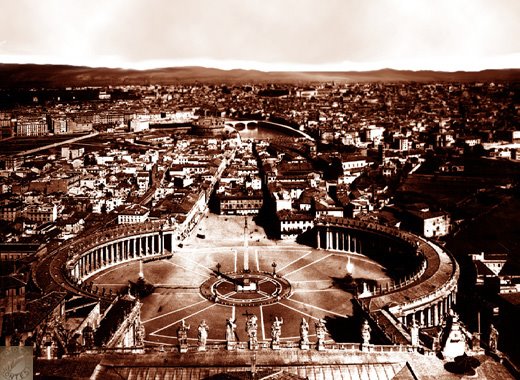
 The first picture was taken in 1899 from the top of the Saint Peter’s Basilica. The “spina di borgo”, characteristic zone of the medieval and renaissance Rome, has been demolished in order to leave place to the Conciliation street inaugurated in 1937 (Conciliation between Italian kingdom and the Pope in 1929, you have to remember that Rome was ruled bay Popes till 1870 when the “bersaglieri” soldiers of Italian Kingdom entered the city and the Pope retired in Vatican, The popes till 1870 used to reside in “Quirinale” the big palace that staring from 1870 became the palace of the Kings of Italy, Savoia family). On the background the works of construction of the Palace of Justice are still not begun (building work started in 1889 and finished in 1910, architect Guglielmo Calderini).
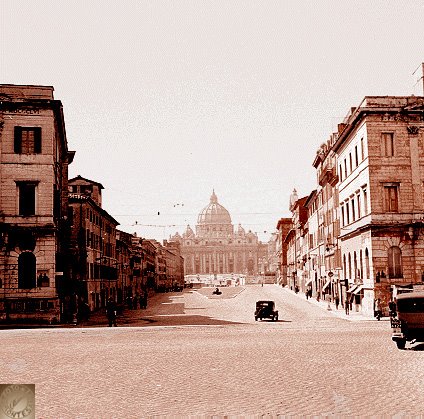
The second picture was taken in 1938 from Sant’Angelo Castle. You can see the Basilica of Saint Peter and Conciliation street not still completed. To the age of the photo the “spina di borgo” had been demolished.
The third picture shows Conciliation Street that was opened in 1937. There are aligned on the way “Santa Maria in Transpontina” very ancient church, rebuilt in 1566 (renaissance facade of G.S. Peruzzi, son of Baldassarre, finished in the 1587 from Mascherino); the palace Torlonia, already Giraud, reproduction in reduced scale of the papal “cancelleria”; the palace of the Convertendi, erected in the second half of the XVI century, demolished, moved and here reconstructed in 1937. In front of this palace there’s the palace of the Penitenzieri, attributed to Pontelli (1481), but almost rebuilt (in the inside, frescoes attributed to the Pinturicchio). The demolition of the “spina di borgo” has destroyed the effect produced by the opening unexpected of Saint Peter Square beyond the buildings of the “spina”. Saint Peter square, masterwork of architecture of Bernini (1656-1667), is an immense ellipses 240 meters width. The 284 colossal columns and the 88 pillars altogether form 3 covered galleries 17 meters wide, crowned from 140 statues of saints and from the great coats of arms of Alexander VII. In bottom to the right porch there is the bronze door of the Vatican palace. To the center of the public square between the two beautiful fountains, there’s an obelisk 25,50 meters high, based on the back of four bronze lions, placed on the high pedestal. This obelisk in the Middle Age was called “aguglia”, and people believed that on the top, in a gold urn, the ashes of Cesar were placed.
Dante, Inferno, XXVI, 119-120

Fatti non foste a viver come bruti,
ma per seguir virtute e conoscenza
(Dante, Inferno, XXVI, 119-120)
You were not created to live as brutes,
But to pursue virtue and knowledge.
Sunday, May 28, 2006
Nomentano Bridge
 Nomentano bridge, many times painted from the XV century, is one of the most scenic monuments of the Roman country. It was erected in the point in which the Nomentana road crossed the Aniene river near the hill of the Sacred Mount, probably in the place where, from the most ancient age, the herds moving towards the sea used to cross the river.
Recent studies tried to reconstruct the original architectonic aspect, on which no information is available neither by the historical roman sources. The bridge appears for the first time in Procopius which narrate the vicissitudes of the Greek-Gothic war, he remembers that all the bridges crossing the Aniene (Mammolo, Salario and Nornentano) where destroyed from Totila in the 549. Subsequently Narsete, the commander sent from Giustinian in Italy and winner of the war, supplied to restore all the bridges destroyed from Totila between Rome and the Umbria.
And now another question.
I’m still desperately searching for someone (English native speakers) interested to the Italian language and to the Italian culture, students, teachers, anyone who likes Italy, its language, its history, its art or its culture… Have you ever thought about studying Italian? Or about coming here in Italy? I don’t make any distinction neither for age neither for sex neither for anything, only I’d like to meet people interested to Italy. But are there teachers teaching Italian? Are there students of languages? Are there persons of Italian origin that like to know the language of their fathers? If there is someone… I’m here waiting for you… Break the ice! (by forum or by e-mail, available in my profile, or any other way). No tricks here, nothing commercial, but only friendly.
Take care!
Spain square in Rome
 In the photo you can see the stairs of Trinity of the Mounts, built by Specchi and F. De Sanctis (1721-1725), with a bequest of French Ambassador S. Gouffier. On the right there is the red cottage where the English poet G. Keats died in the 1821, in this cottage is located a small museum dedicated to Keats and Shelley. To the center, you can see the Sallustian obelisk (coming from the Sallustian gardens, near Salaria door), imperial roman imitation of Egyptian obelisks of Seti and Ramesse, raised here in 1789 by the Pope Sixtus V. On the top of the stairs there is Trinity of the Mounts church, one of the French churches of Rome, begun in 1495 from Carl VIII, consecrated in the 1585 from Sixtus V, restored, after the breakdowns of the Napoleonic occupation, from F. Mazois, at expenses of Louis XVIII.
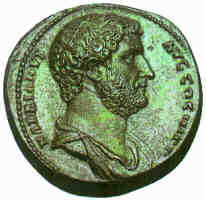
The Emperor Adrian


I have to apologize for my bad English, perhaps my English speakers visitors go straight away in seconds (only 2 seconds this time) because of my English… I noticed that my statistical site reports the visit time according to the reader’s time and because my readers are all over the world and use very different times (GMT, GMT+ …) I find my last visit enlisted at 11.30 a.m. (Central Europe Time) and the previous visits from abroad at 12.30! … That’s the thing! And now I’m newly sending a message in order to check the web, searching for readers and, I’d highlight, for readers interested in Italian language or in Italian culture. Now I’d tell you something interesting about Rome photos, there’s a site
(http://www.photoroma.com/index.php) where you can download free photos not only of Rome but also of many others Italian cities, I just checked this site and it was well worth the effort. It’s not a tourist-oriented site, it’s a roman people oriented site! You can find there something interesting about “madonnelle romane” (the Madonna’s images at the corners of buildings) end also about the history of Rome, from the Italian corner. … But the site, which gives also an essential description of every photo, is in Italian… that’s why you’d do better learning Italian at list as I can read English!
From now on I’ll put on my posts some photographs downloaded from “photoroma” and I’ll tray to explicate what they are about, in my bad English.
Now we start from Sant’Angelo Castle (you can see it in the photo). The architect Decrianus built this monument when Adrian was emperor in 135 a. C. and the work ended in 139 with Antoninus Pius. Called also Hadrianaeum (the monument or the tomb of Hadrian) it’s very big, on the top of a square base (84x84 m.), there was, and there is now, a cylindrical construction (64 m. of diameter), of travertine (an Italian and typical roman marble) and “lava” stone, and a “tumulus” (a little hill which doesn’t exist no more) of earth, Etruscan style, cultivated as a garden. Inside a helicoidal “rampa” (climb), still existing, and a rectilinear gallery lead to the cell, in which the emperors from Adrian to Septimius Severus were buried, with their families.
But I called my site “Italian culture in pills” therefore now I’ll tell you something else about Adrian.
There’s a poetic fragment of emperor Adrian in the “Historia Augusta” (25,9) you have to know. The poet-emperor waiting for the death tells something minimal to his own soul, which is going to go in shadow places where smile isn’t possible:
ADRANI MORIENTIS AD ANIMAM SUAM. “DYING ADRIAN TO HIS SOUL.”
Animula, vagula, blandula,
Hospes, comesque corporis,
Quae nunc abibis in loca,
Pallidula, rigida, nudula,
Nec, ut soles, dabis jocos
Which to the English reader may see translated with all the spirit of the original:
Poor, little, pretty soul,
Guest and mate of my body,
You are going to go to neglected
And frosted shadow places,
You’ll no more make me happy
With your pleasing vein and humorous folly
Lake you where used to.
But you have to remember that Adrian was also an emperor and certainly not the champion of tolerance both in peace and in war! Poetry is not all the life!
Take care!
Searching for readers
Today I communicated to “Google” and to “Virgilio” the opening of my site “How to learn Italian” (former “Learn Italian”); in some days it would be inserted. My main site has already been inserted on Google but also my blog in Italian and my main blog in English have been inserted. I have therefore good hopes to succeed to insert also my site about learning Italian language. Perhaps (I hope at list) I will succeed to obtain a greater number of visitors. This moment it seems to me I constructed a castle which no reader likes enter … today I found that a guest read four pages of my main site and then jumped to the FORUM! Naturally he hasn’t left any written trace of his presence, but I cannot ask too much. I continue to ask myself what could be made in order to make my sites, and in particular those in English, more visible… as I have already said, sometimes when I send a post (not always) I find (by statistical sites) that this English bog is visited by someone coming from abroad, in average little more than a half from European countries and little less than a half from the USA, and just one o two from other countries, generally these accesses are short, starting from just seconds, to 2 or 3 minutes (rarest) but after this magical moment the site dusk becomes total and I can’t catch a visitor until the successive post… I hope, posting this to find some reader interested. Thanks!
Wednesday, May 24, 2006
Wait! Stop! Just a moment!
Wait! Stop! Just a moment! But is it possible? You have to get immediately out of this site and you can't read a line of my blog? I know well that all the readers you can find on the web hare usually in a hurry, I know well that the time is precious… but stop just a moment! Do you know someone interested in Italian language or in Italian culture? If you know someone tell him about this site… perhaps it could de useful for him! Thanks for listening!
MY ITALIAN-ENGLISH FORUM

Dear readers,
my ENGLISH-ITALIANO FORUM
just started. Encouraged from the number of my readers, moreover collapsed after the week of glory of “Virgilio TOP FIVE” (my site “ESSERE IN DUE” vas published as “top five” site) and encouraged from the recurrent presence of some readers according to my statistical site, I decided to start a public access FORUM, I chose one that gives a good guarantee of seriousness and today, March 23 2006, I finally activated it. This FORUM whose URL is:
will be accessible from my site “ESSERE IN DUE” (“TO BE TWO”)
and from my blog, whose title is once again “TO BE IN TWO”
to the site I will add a dedicated page to the FORUM, to the BLOG I will add the connection in on directory “MY SITES” (“I MIEI SITI”) but I will be able to only give an warning (a post) that will slide towards the bottom with the arrival of the other posts; the structure of the blog does not allow to evidence too much links, the part of code HTML available is minimal. I will slowly try to become some more expert in the use of the Forum and will try to explain everything in a clear way on the page “FORUM” of the site “ESSERE IN DUE”. For the moment you can however approach the FORUM and, if you succeed to make it to work before I can, I will be the first one to be content. I know very well that just few web customers use a forum and that therefore many readers are mistrustful but I can guarantee to you that in my Forum, like in all my sites and blogs, there aren’t tricks neither trades purposes of any kind. It’s only an exchange of ideas between friends. Thanks!
I’m waiting for you! Characteristics of the FORUM: 1) Anyone can insert new posts; in order to approach like a gust sign up isn’t necessary! 2) Who thinks it opportune can, if he likes, to sign up (but this is not at all necessary in order to participate to the Forum), in this case he must insert a valid email to which the password will be sent. But, I repeat, all this procedure is not at all necessary in order to approach the Forum. The function that would concur to send an email through the forum to another recorded customer has been switched off, in order to avoid whichever possible action of disturbance (however almost unthinkable in a Forum like mine). 3) Clearly you must avoid putting in the posts things like last names, addresses, email, telephone or cellular numbers or credit card numbers. These things, included in a post, are automatically accessible to the public. 4) Now it’s enough in order to try to approach the Forum… I repeat that this is not a general Forum (where you can find some “minimal” risk, if a “minimum” of precaution is not used), this is the most checked Forum, and with high level of reliability. Therefore, you can try my forum in English. There is something also for you!
I’m waiting for you! Characteristics of the FORUM: 1) Anyone can insert new posts; in order to approach like a gust sign up isn’t necessary! 2) Who thinks it opportune can, if he likes, to sign up (but this is not at all necessary in order to participate to the Forum), in this case he must insert a valid email to which the password will be sent. But, I repeat, all this procedure is not at all necessary in order to approach the Forum. The function that would concur to send an email through the forum to another recorded customer has been switched off, in order to avoid whichever possible action of disturbance (however almost unthinkable in a Forum like mine). 3) Clearly you must avoid putting in the posts things like last names, addresses, email, telephone or cellular numbers or credit card numbers. These things, included in a post, are automatically accessible to the public. 4) Now it’s enough in order to try to approach the Forum… I repeat that this is not a general Forum (where you can find some “minimal” risk, if a “minimum” of precaution is not used), this is the most checked Forum, and with high level of reliability. Therefore, you can try my forum in English. There is something also for you!
Sunday, May 21, 2006
My new site "LEARN ITALIAN"... just starting...
Are you interested in learning Italian online by practicing it with me, an old man living in Rome and involved in cultural activities, who is also interested in practicing English? You can easily write or speak Italian online to improve your skills in grammar or conversation, by exchanging e-mails or kipping in touch with a chat like MSN.Nothing commercial here, but only friendly. In short, you can get everything you need to learn and practice Italian (e-mail, text chat or voice chat).
As you know, real Italian language, used by Italian people, is very different from the grammar-Italian used in classrooms but not in real life. To understand a real Italian conversation you have to get accustomed to the slang, to the usual expressions, to the way native speakers speak in everyday conversation.
If you are interested in Italian or classical culture you can contact me also in order to exchange ideas about Italian history or culture.
Would you like to find an Italian-speaking language partner? I’m here! You only have to "break the ice”!
As you know, real Italian language, used by Italian people, is very different from the grammar-Italian used in classrooms but not in real life. To understand a real Italian conversation you have to get accustomed to the slang, to the usual expressions, to the way native speakers speak in everyday conversation.
If you are interested in Italian or classical culture you can contact me also in order to exchange ideas about Italian history or culture.
Would you like to find an Italian-speaking language partner? I’m here! You only have to "break the ice”!
On my site http://xoomer.virgilio.it/learn_italian/index.htm you can look at you can directly look at Rai News 24, 24/7 news channel or, if you like better, you can listen to the Italian Radio or get some links to sites about learning Italian language (first the BBC page http://www.bbc.co.uk/languages/italian/).
LEARN ITALIAN
A new born in the family of my sites, this new site “LEARN ITALIAN”, created, I do not hide it, with the secret hope of finding finally some reader of English language, is about to learn Italian language by persons of English language, now it's only a very small experiment, but….
Saturday, May 20, 2006
Learn Italian
Would you like to learn Italian or simply practice it (reading, writing and speaking) exchanging ideas about what you like (your country, my country, and so on)? You have nothing better than get in touch with me, I’m not searching for money or anything like that, I only would like to get in touch with someone interested in learning Italian in US, in Canada or elsewhere, college students, teachers or what you like… Is there someone interested in Italian conversation?
Galaxy
 Which connection exists between a galaxy and my site? Frankly I don't know but I think that web sailors live on far galaxies, from time to time arrives some small light flash, but generally it lasts only a second. I'm always sending signals in several directions but I never got an answer, I am trying to find some way in order to increase the visibility of my site because the frequency of the visitors is collapsed to the historical minimum… I usually check my mailboxes every day and also my site and the statistical one but I fear that I’m lost in some far galaxy. Visits: nobody at all! I will try with some directory, but I don’t think it will be useful!
Friday, May 19, 2006
Perplexed!

I don’t know what to think, nobody at all, no… just one today visited my sites, no one opened this blog in an entire day, perhaps it’s not visible… but does it exist a way in order to become visible? Are there directories in order to be classified? Sure, I’m perplexed… what would I do in order to increase the visibility? The Yahoo Community allows you to have a discreet blog and also to enroll your blog in a directory or more, but there is a complicated mechanism of access and the directory is useful only for those who are advanced in informatics! What could the small non-professional web user do? My most important site was classified on Google some days ago, but till now only “2” single customers arrived to my site from the search engines with a search key that had some connection with my site (“How to avoid the sadness” and “to be two”) but others arrived trying very different search keys! … And then naturally these visitors ”for mistake” closed my site in less than a second … therefore going on this way I will never find I single reader, how could I find someone to chat or to exchange opinions? When I enter my posts, exactly in that moment, I register three or four accesses “bite and escape“ from abroad, then the total silence follows and lasts for hours! Have you something to suggest? Thank you!
Thursday, May 18, 2006
Nothing from US, UK, Canada or elsewhere
 I would have be able to insert other pictures of ancient monuments in Rome but it’s not easy to find pictures without copyright, and then got back to the usual message. To receive from you not a letter but at list a comment on the blog would be truly beautiful!
Wednesday, May 17, 2006
The temple of Vesta
 The Round Temple is located with to the Portunus Temple in the archaeological area of the Foro Boario, the ancient market of the meats of Rome. Since the Renaissance it was famous as Temple of Vesta, in analogy to that one of the Roman Foro. When the dedication by a trader of olives, Marcus Octavius Erennius, was discovered the temple was correctly attributed to Hercules Victor, divinity already present in that zone. The Temple is the most ancient building in marble in Rome. It was realized in pentelico Greek marble in the I sec. b. C.; the restorations in lunense marble go back to the age of Tiberius.
Warning for my readers.
If you click on the photos you can magnify them, sure the game worth the candle! Thanks and please write two lines to me!
Subscribe to:
Posts (Atom)